
shelter poperinge
projectteam: stefan.schöning.studio
client: municipality of poperinge
year: 2017 - present
pictures: 1-4 ilse liekens
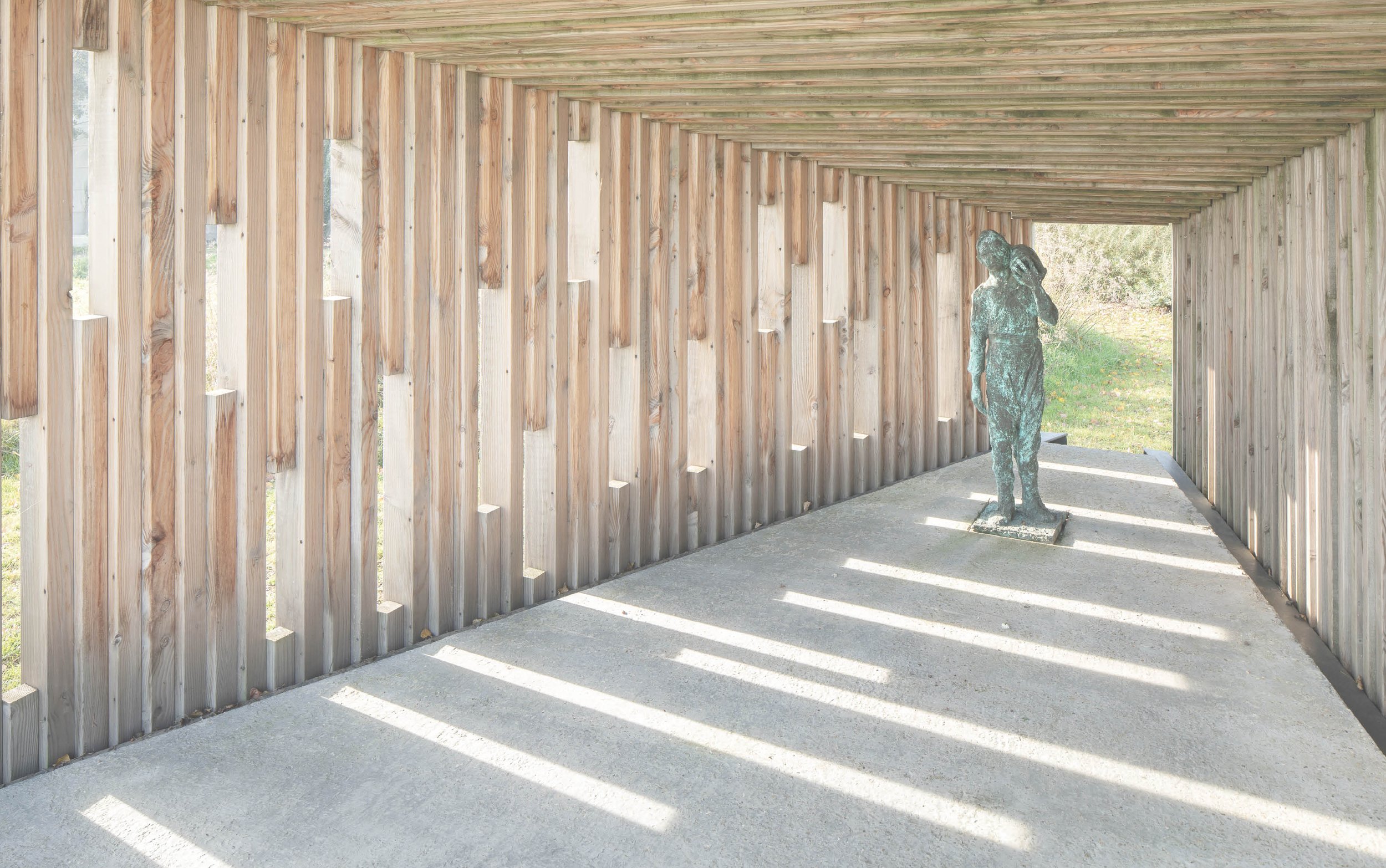
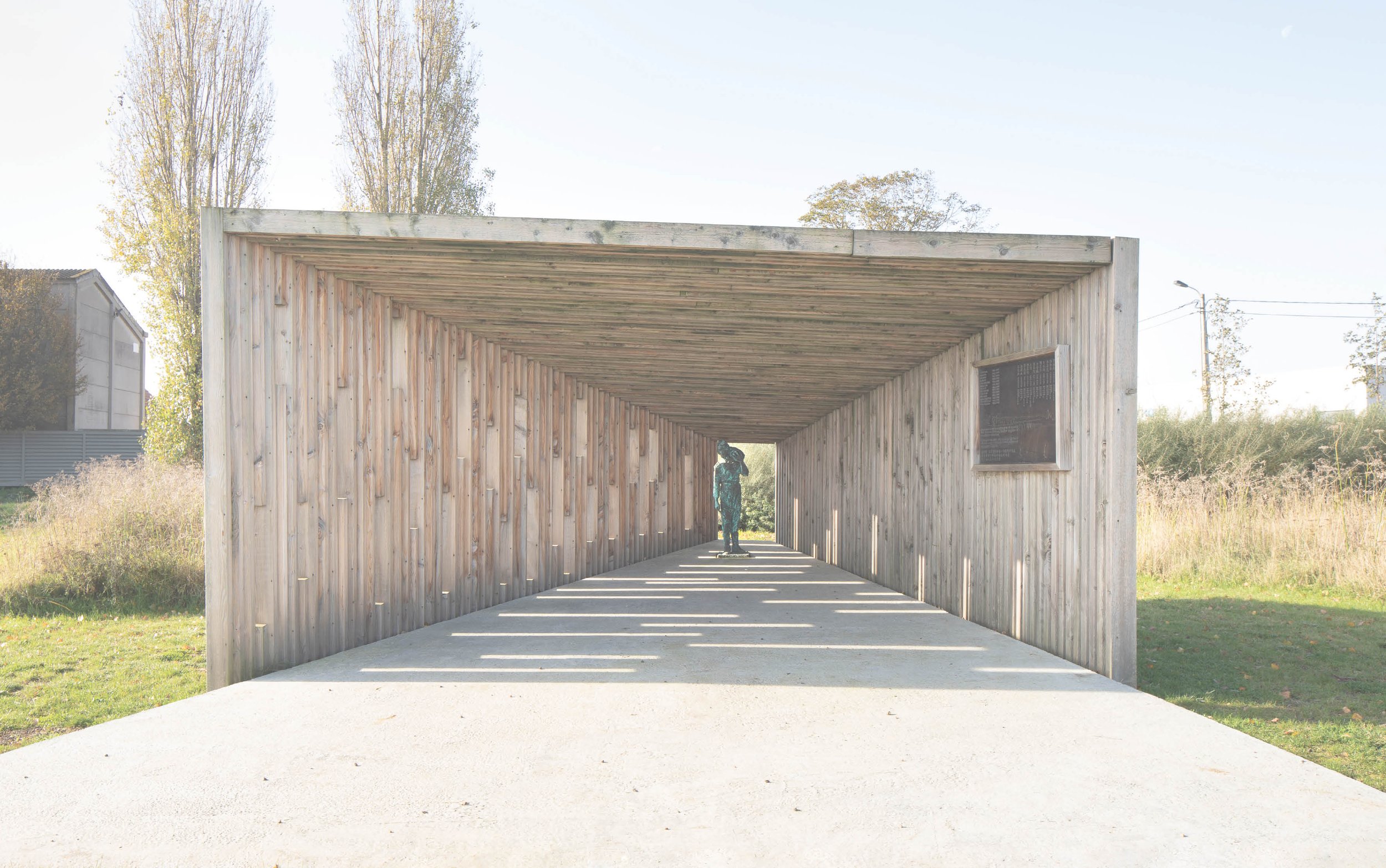
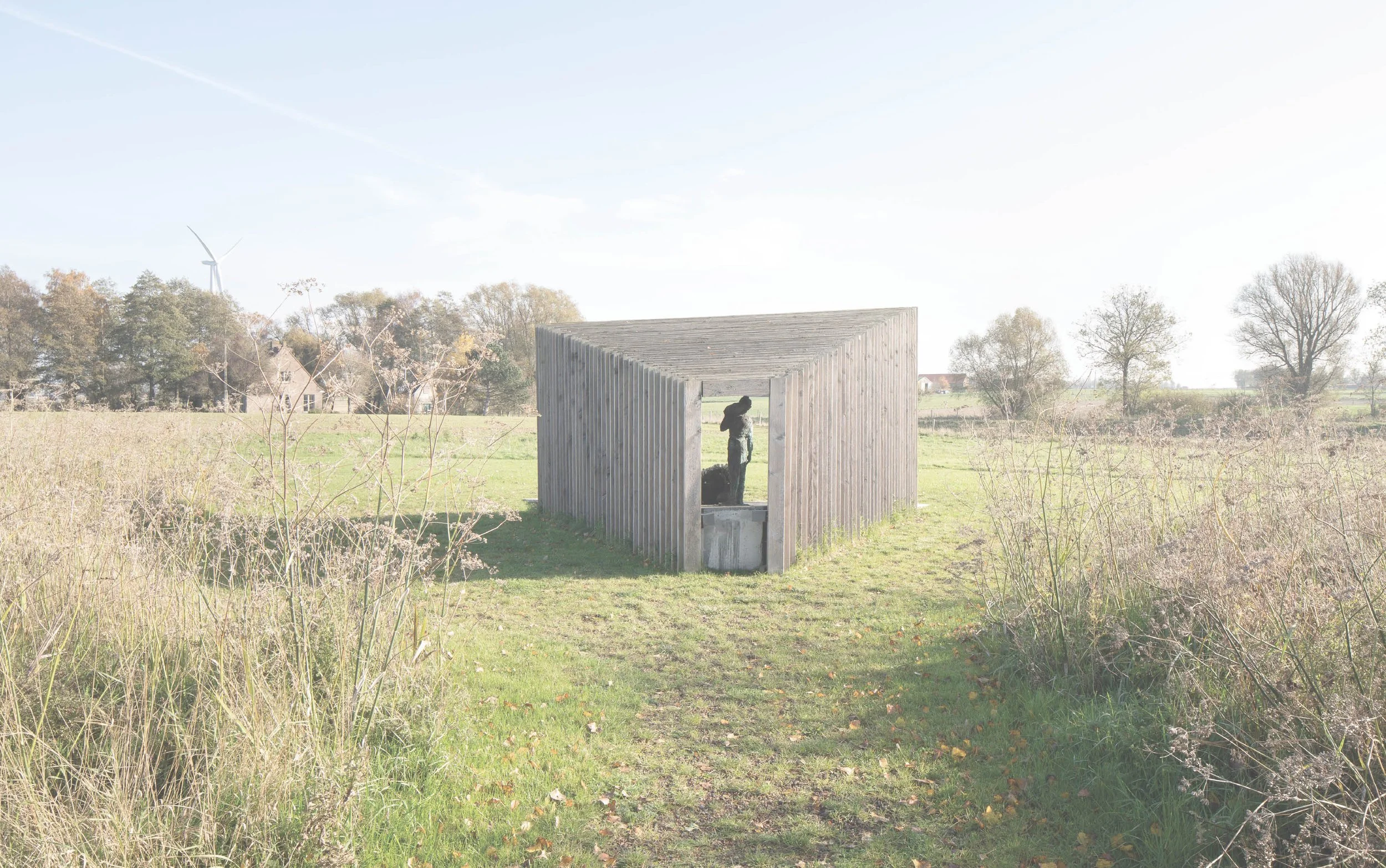
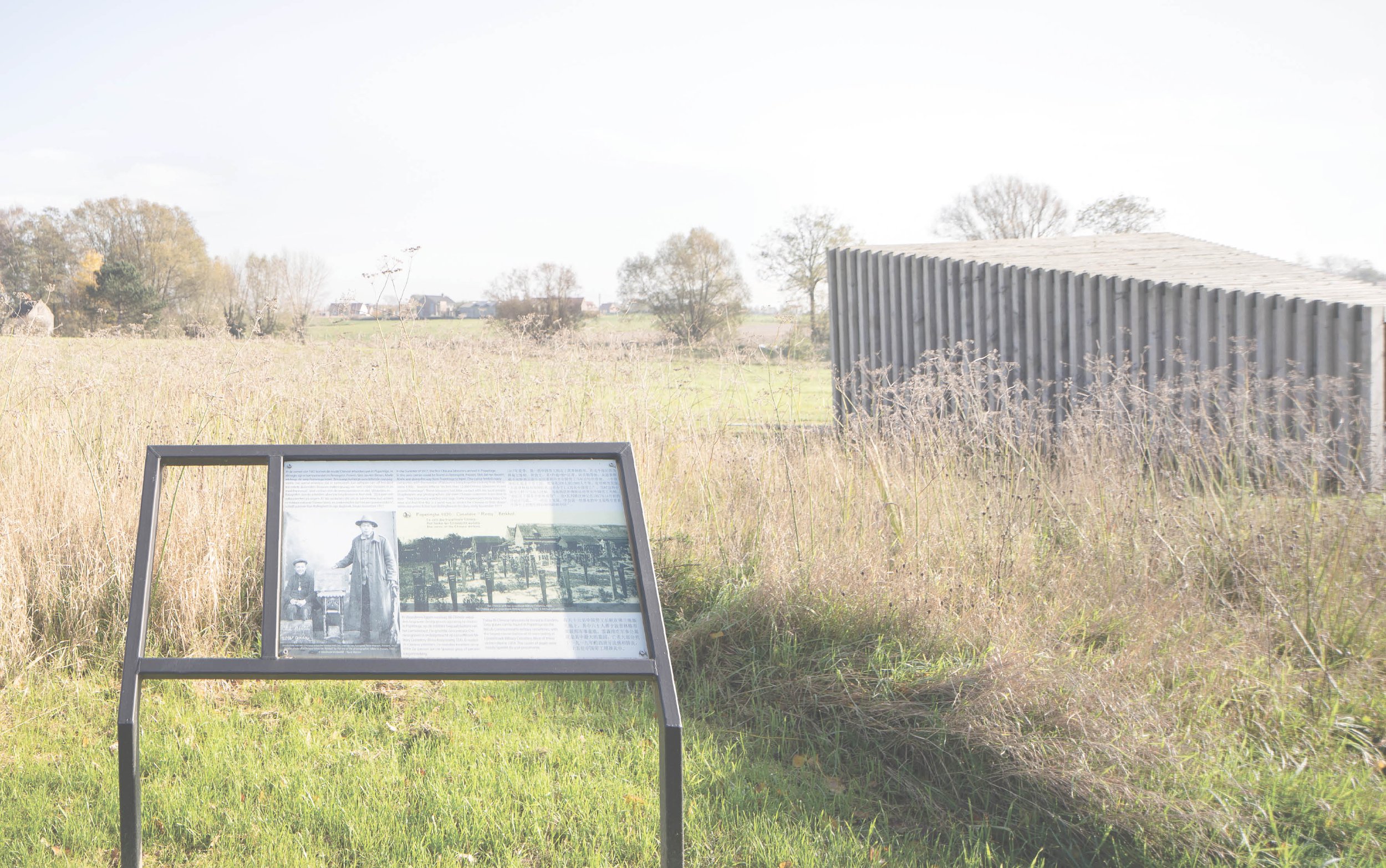
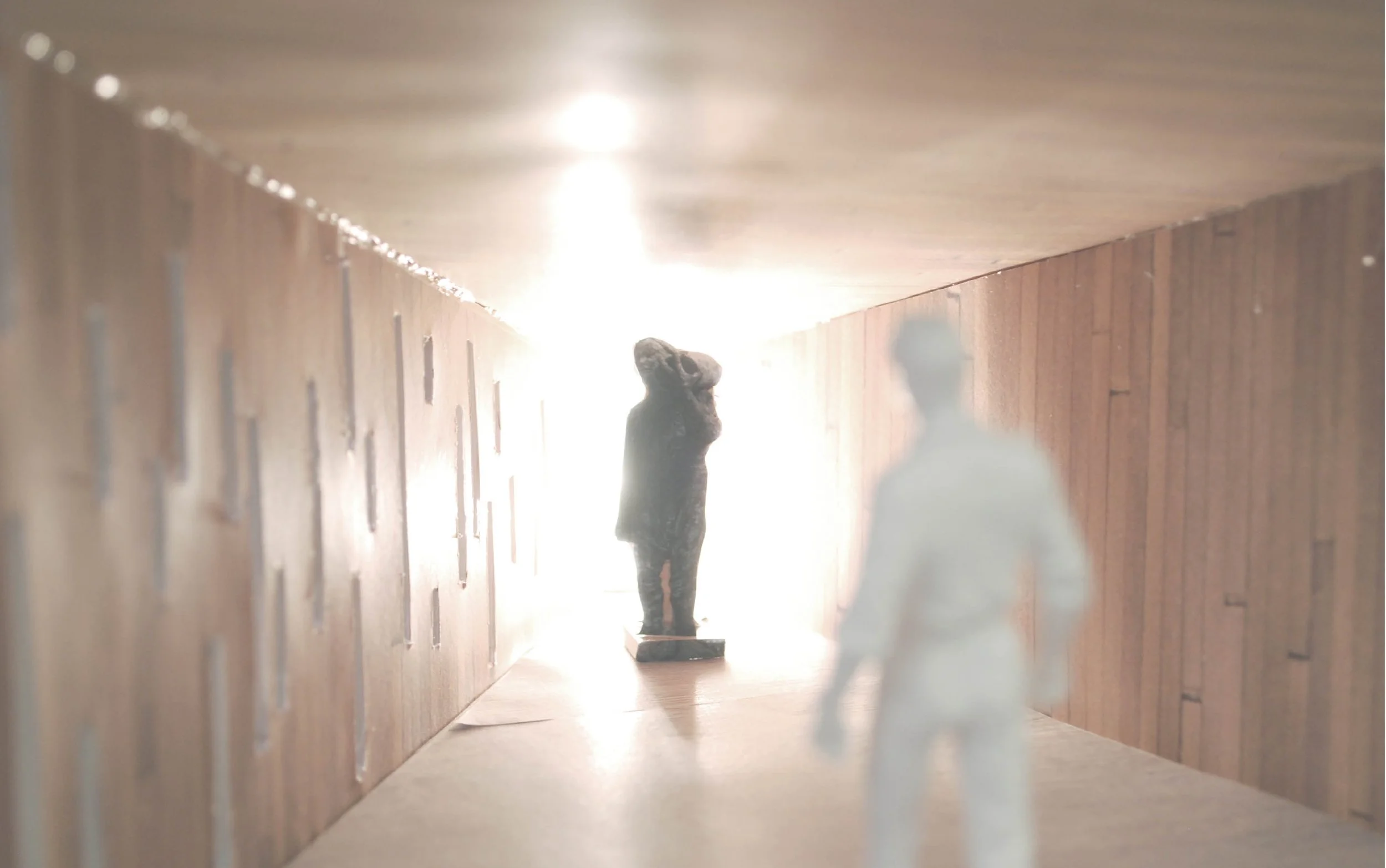
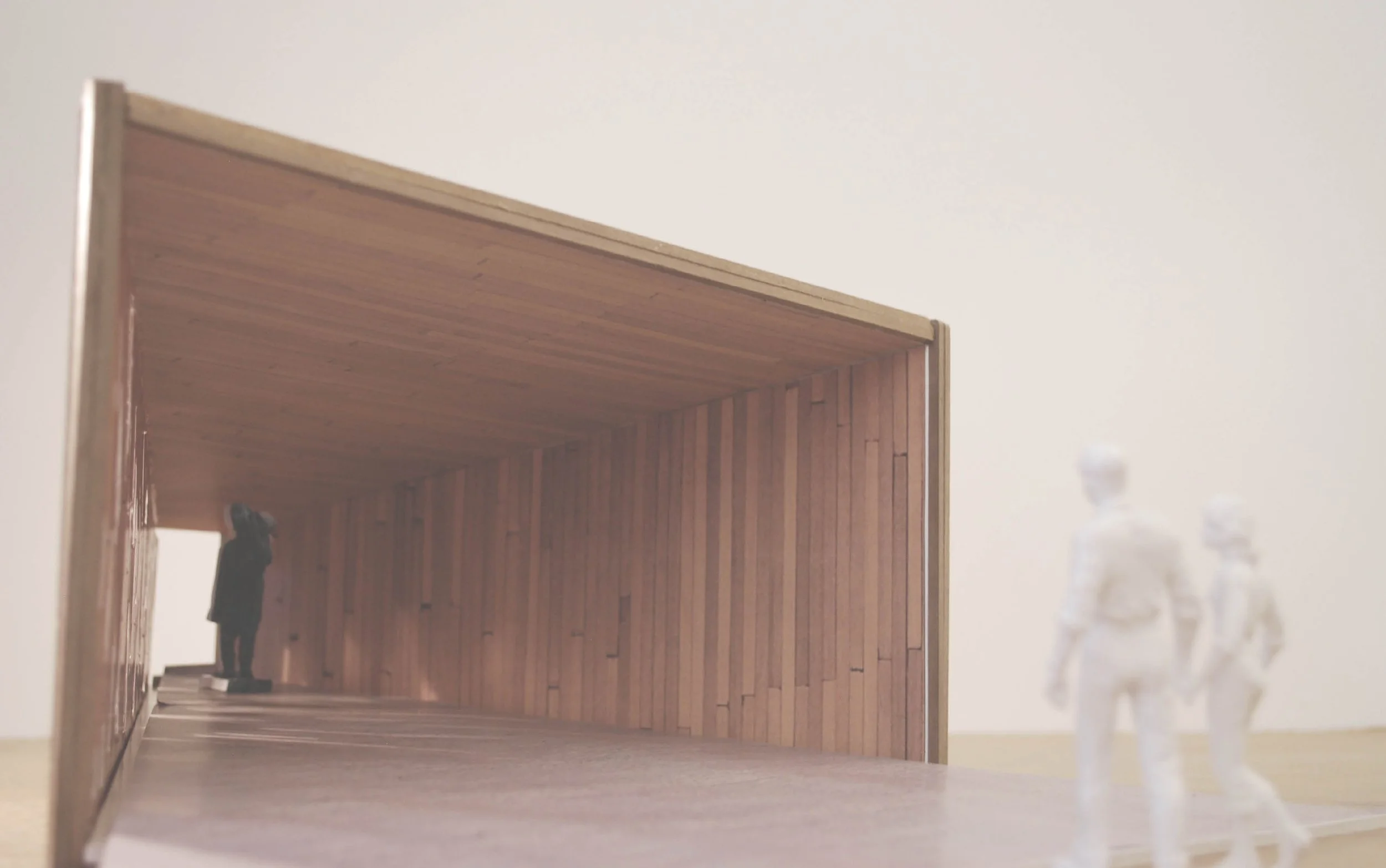
the shelter is a world war 1 memorial monument in memory of the chinese labor corps in general and the bombing on the ‘kamp busseboom’ in particular. in search for a suitable approach to design a monument for ‘the sjouwer’ (the bronze statue that represents a chinese worker) we searched for metaphors related to the purpose of this assignment. each of these concepts links us to a function we want to assign to this place.
- a shelter provides protection.
- a corridor connects the past with the future through the present.
- a room is an intimate space.
- a shrine is a coffin or building for the preservation of precious objects.
- an altar (altus = high) is a table where rituals are performed to commemorate and honor.
- a space creates a sense of openness.
- a stage is an increase where people meet to listen.
- a tabernacle is a sacrament house (catholic doctrine) but is also a tent of meeting in the hebrew bible.
- a tomb is a construction for the accommodation of a deceased.
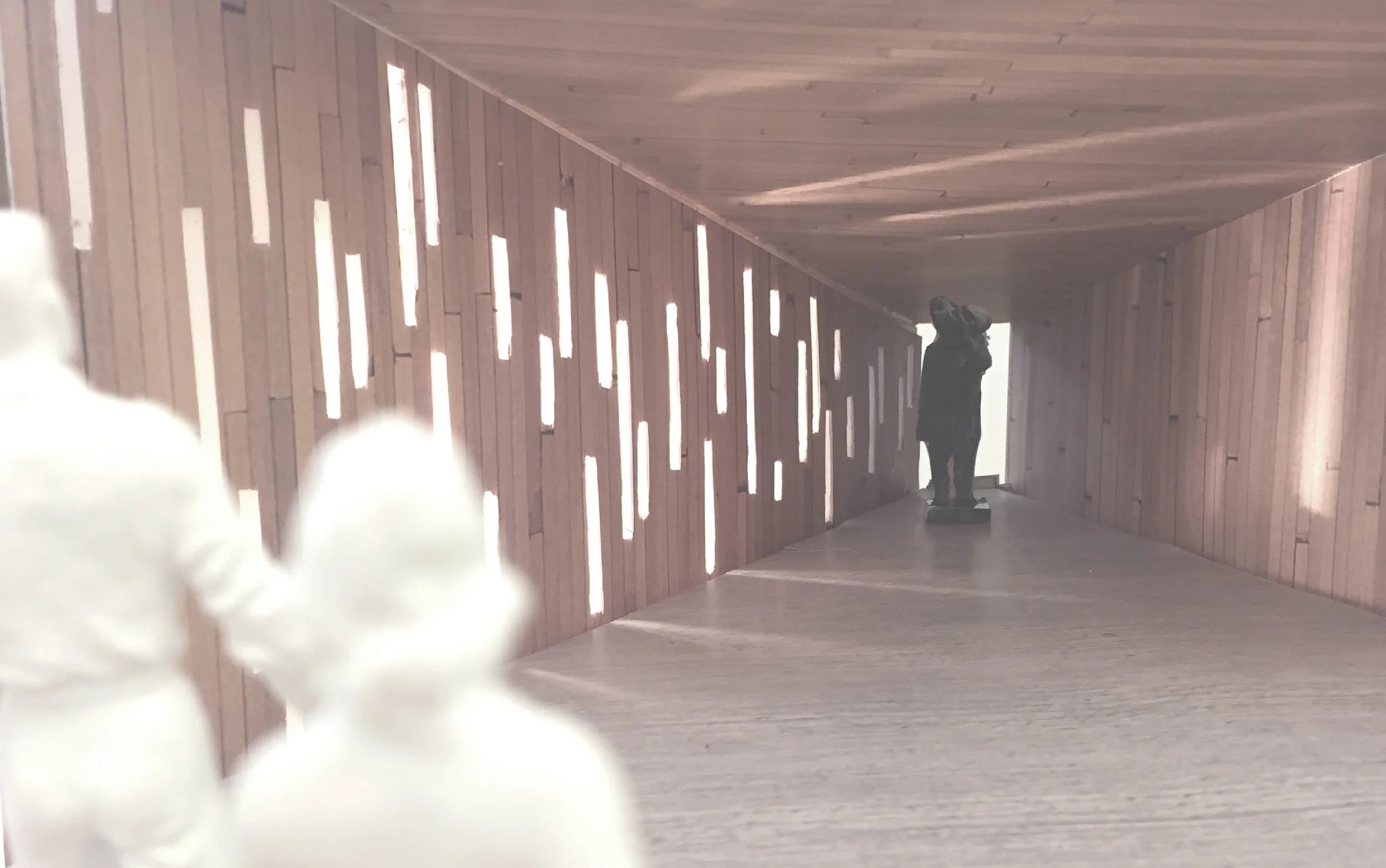
- a window is an opening in a wall to allow light to pass through.
the aforementioned metaphors form the basis of the concept: an open pavilion in which ‘the sjouwer’ looks at the future. the shape of the pavilion is therefore divergent. this divergence has been repeated in the floor and the ceiling. in this way the visitor is given the opportunity to see “the sjouwer” - measuring only 110cm - in a dignified way (eye level) and from a distance before he can greet the statue. through the sloping roof, the visitor of the shrine is obliged to bend more or less according to his own shape and stay at a worthwhile distance. the floor of the pavilion is a concrete carpet that rolls in from the front of the building and forms a shelf with a soft slope. the pavilion is an open room where people meet, in a serene way and with respect for the past.